
When you’re buying a mini excavator for utility work or site prep, the most important question isn’t brand — it’s fit.
How deep do you need to dig?
How tight are your job sites?
Are you trenching daily, or prepping foundations and pads?
CASE mini excavators are built with contractor-focused hydraulics, compact swing designs, and dependable performance. But choosing the right size machine can make a major difference in productivity, operating cost, and jobsite flexibility.
If you’re currently comparing CASE mini excavators for sale, understanding how these models differ will help you invest in the machine that matches your workload — not just today’s job, but the majority of your projects.
Define the Work You Do Most
Before comparing specifications, identify the type of work that accounts for the majority of your projects.
- Light Residential & Tight-Access Utility Work
If most of your jobs involve trenching in backyards, working near foundations, or operating in confined areas, maneuverability and a zero-tail-swing design should be priorities. - Daily Utility & Mixed Site Prep
If your workload includes trenching, septic installations, foundation drains, and light grading, a mid-size machine with enhanced stability and hydraulic performance may offer greater versatility. - Commercial Utility & Deeper Excavation
For larger trench runs, deeper footings, and heavier site preparation, increased operating weight and dig depth become essential.
With those categories in mind, here’s how each CASE model fits real-world demands.
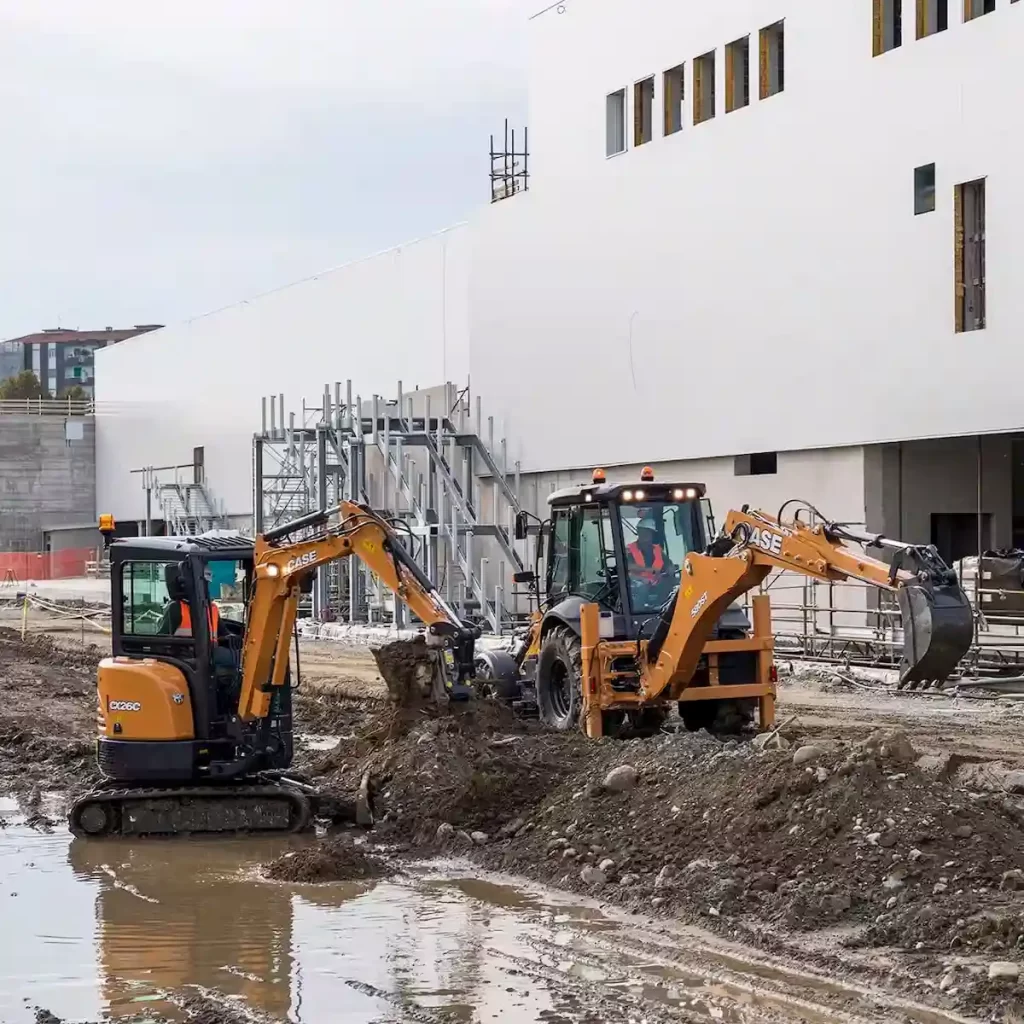
CASE CX26C
Best for Tight Access & Light Utility Work
The CX26C becomes your most compact, utility-focused option. It’s ideal for:
- Residential trenching
- Irrigation and drainage installs
- Electrical and cable line work
- Backyard access jobs
Its zero tail-swing design allows operation near structures and property lines—critical for tight Midwest job sites.
For contractors comparing compact CASE mini excavators, the CX26C offers maneuverability without sacrificing usable dig depth.
CASE CX30C
Balanced Power for Everyday Utility & Site Prep
The CX30C delivers enhanced capability while maintaining its compact versatility. This machine is well-suited for:
- Septic system installs
- Foundation trenching
- Small commercial utility projects
- Landscaping and light grading
Compared to the CX26C, you gain:
- Additional digging depth
- Increased breakout force
- Greater lifting capacity
- Improved stability
For many contractors, this size class becomes the true daily-driver mini excavator.
CASE CX50D
Built for Deeper Excavation & Heavy Site Prep
For contractors handling commercial utility trenching, larger septic systems, retaining wall prep, or deeper foundation work, the CX50D provides the added reach and strength required.
It offers:
- Greater lift capacity
- Strong hydraulic performance
- Improved stability under load
- Enhanced operator comfort for longer workdays
This model suits crews that need compact maneuverability but can’t afford to be constrained by depth or power.
Side-by-Side Utility Comparison
CASE CX26C
Best for tight residential trenching
Dig depth: ~8–9 ft
Jobsite size: Very tight access
Ideal for irrigation, fencing, and light utility contractors
CASE CX30C
Best for daily utility and mixed work
Dig depth: ~9–10 ft
Jobsite size: Tight to moderate
Ideal for septic, plumbing, and general contractors
CASE CX50D
Best for commercial utility and deeper excavation
Dig depth: 11+ ft
Jobsite size: Moderate
Ideal for utility crews and site prep contractors
How to Choose the Right Size for Your Business
Instead of focusing only on horsepower, consider the full ownership picture.
Average trench depth matters—if you routinely dig deeper than 8 feet, a smaller machine may limit productivity.
Transportation capacity should align with your current truck-and-trailer setup.
Attachment requirements affect hydraulic demands and performance.
And long-term growth plans should factor into your decision, especially if you’re expanding into larger utility contracts.
In many cases, the right purchase decision balances operator comfort, hydraulic capability, current availability, and financing structure. The goal is to select a machine that improves daily productivity while protecting long-term return on investment.
Why Local Dealer Support Matters
When purchasing a mini excavator, uptime is critical. Utility work is deadline-driven, and delays can impact entire projects.
Working with a regional CASE equipment dealer provides:
• Fast parts access
• Factory-trained service technicians
• Warranty support
• Financing options
• Machine setup guidance and attachment matching
Reliable support ensures your machine stays productive long after the initial purchase.
Match the Machine to the Majority of Your Work
For tight-access trenching and light residential jobs, the CX26C delivers compact efficiency and zero tail-swing maneuverability.
If you need a versatile machine that meets daily utility needs while leaving room to grow, the CX30C offers a strong balance of power, depth, and stability.
For commercial site prep and deeper excavation, the CX50D provides the strength and reach required.
Contact Us Today
If you’re currently comparing CASE mini excavators, the right machine isn’t simply the biggest — it’s the one aligned with your most frequent jobs.
Choosing correctly means higher productivity, lower operating costs, and equipment that supports your business long term.