
When it comes to compact equipment, two of the most commonly compared machines are mini excavators and skid steers.
Both are widely used in construction, landscaping, and utility work and offer strong versatility on the jobsite.
However, they are built for different types of tasks. Choosing the right machine can impact everything from productivity to jobsite efficiency and even operating costs.
If you’re deciding between the two, understanding how each machine performs in real-world applications can help you determine which one is the better fit for your work.
What Is a Mini Excavator Best Used For?
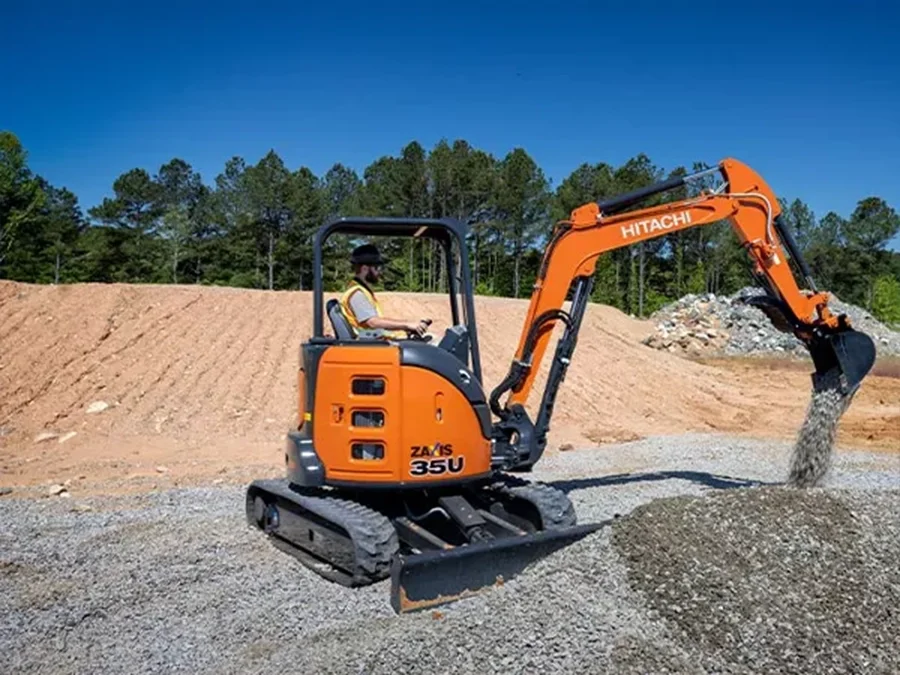
Mini excavators are designed primarily for digging and trenching. Their tracked design, boom arm, and hydraulic attachments allow them to perform precise excavation work in a variety of conditions.
They are especially useful in jobs that require depth, accuracy, and the ability to work in tighter spaces.
Common uses include:
- trenching for utilities
- foundation excavation
- drainage and grading work
- landscaping projects
- light demolition
Machines like the Hitachi ZX26U-5N or ZX35U-5N are often used for these types of tasks, offering a balance of compact size and strong digging performance. Comparable models such as the Takeuchi TB225 or CASE CX26C are also commonly seen on jobsites where trenching and excavation are the primary focus.
One of the biggest advantages of a mini excavator is its ability to dig below ground level efficiently, something skid steers are not designed to do.
What Is a Skid Steer Best Used For?
Skid steers are built for versatility above ground. With a wide range of attachments available, they can handle material movement, grading, lifting, and surface work across many types of jobs.
Unlike mini excavators, skid steers use wheels (or tracks on compact track loaders) and rely heavily on attachments to perform various tasks.
Common applications include:
- moving dirt, gravel, or debris
- loading trucks or trailers
- grading and leveling surfaces
- snow removal
- material handling with forks or buckets
Because of their speed and maneuverability, skid steers are often used to move material quickly across a jobsite.
Key Differences Between Mini Excavators and Skid Steers
While both machines are compact and versatile, their differences become more apparent when looking at how they perform on specific tasks.
Digging Capability
Mini excavators are purpose-built for digging. Their boom arm allows them to reach below ground level and excavate with precision.
Skid steers, on the other hand, are limited to surface-level digging. While they can scrape or move material, they are not designed for deep trenching or excavation.
If your work involves trenching or digging, a mini excavator is typically the better choice.
Versatility
Skid steers are known for their ability to handle a wide variety of attachments, including buckets, forks, augers, and snow blades. This makes them highly adaptable for different tasks throughout the day.
Mini excavators can also use attachments, but they are more specialized for digging and excavation.
If you need one machine to handle multiple above-ground tasks, a skid steer may offer more flexibility.
Jobsite Access and Maneuverability
Mini excavators are often better suited to tight or confined spaces, especially when equipped with zero-tail-swing designs. This allows them to operate close to structures without risking damage.
For example, compact machines like the Hitachi ZX17U-5N or CASE CX17C are frequently used in residential areas where space is limited.
Skid steers are also highly maneuverable, particularly in open areas, but they may require more space to operate effectively depending on the jobsite layout.
Ground Impact
Mini excavators use tracks, which distribute weight more evenly and reduce ground disturbance. This can be important when working on finished surfaces or softer ground.
Skid steers, particularly wheeled models, can cause more surface disruption when turning or operating on sensitive terrain.
For landscaping or jobs where ground preservation matters, mini excavators often have an advantage.
Speed and Efficiency
Skid steers generally move faster around a jobsite, making them more efficient for tasks like transporting materials or loading trucks.
Mini excavators are slower but offer greater precision, especially for digging and trenching work.
If your job requires moving material quickly, a skid steer may be more efficient.
If precision is more important, a mini excavator is often the better option.
When a Mini Excavator Is the Better Choice
A mini excavator is typically the right option when your work involves:
- trenching or digging below ground
- working in confined or restricted spaces
- precision excavation
- utility installation
- foundation work
Machines like the Hitachi ZX30U-5N or Takeuchi TB235-2 are often chosen for jobs that require consistent digging performance and control.
When a Skid Steer Is the Better Choice
A skid steer is often the better fit for jobs that involve:
- moving large amounts of material
- loading trucks or trailers
- grading or leveling surfaces
- snow removal
- multi-purpose jobsite tasks
Their ability to quickly switch attachments makes them a strong choice for contractors who need flexibility throughout the day.
Choosing the Right Machine for Your Work
The decision between a mini excavator and a skid steer ultimately comes down to the type of work you perform most often.
If your projects are focused on excavation, trenching, and precision digging, a mini excavator is likely the better investment. If your work involves material handling, grading, and general jobsite tasks, a skid steer may offer more versatility.
In many cases, contractors find that having access to both machines provides the greatest flexibility. Each serves a distinct role, and together they can handle a wide range of jobsite demands.
Making the Right Choice for Your Jobsite
Mini excavators and skid steers are both valuable pieces of equipment, but they are designed for different purposes. Understanding their strengths and limitations can help ensure you choose the right machine for your projects.
By matching the equipment to the job, contractors can improve efficiency, reduce downtime, and get more done on every project.