
Winter conditions expose equipment weaknesses faster than any other season.
Cold starts, sluggish hydraulics, reduced traction, and operator fatigue can all turn small issues into costly downtime. For contractors who rely on mini excavators during winter months, performance isn’t just about horsepower — it’s about how the machine behaves when temperatures drop, and the ground hardens.
At Luby Equipment Services, we work with contractors who use mini excavators year-round for utilities, maintenance, and site work. This guide focuses on what actually matters when operating a mini excavator in winter, and why certain Takeuchi and CASE models are trusted for cold-weather reliability.
Why Mini Excavators Are a Winter Advantage
Mini excavators are often chosen for winter jobs, not because they are smaller, but because they are more controllable and predictable in poor conditions.
Compared to larger machines, mini excavators offer:
- Better weight distribution on snow- or ice-covered ground
- Lower ground pressure on frozen or partially thawed surfaces
- Greater control in tight, winter-restricted work areas
For residential utilities, municipal repairs, and maintenance work, minis often remain productive when larger equipment becomes inefficient.
Cold Starts: The First Test of Winter Reliability
A mini excavator that struggles to start in winter is a liability. Cold-start reliability depends on engine design, electrical systems, and the machine’s overall condition.
Winter-ready mini excavators typically feature:
- Proven diesel engines with consistent cold-start behavior
- Reliable preheat or glow plug systems
- Simple service access for batteries and filters
Takeuchi mini excavators, such as the TB216 and TB235-2, are well known for reliable starts in cold conditions, which is why they are frequently used by contractors who can’t delay work due to weather.
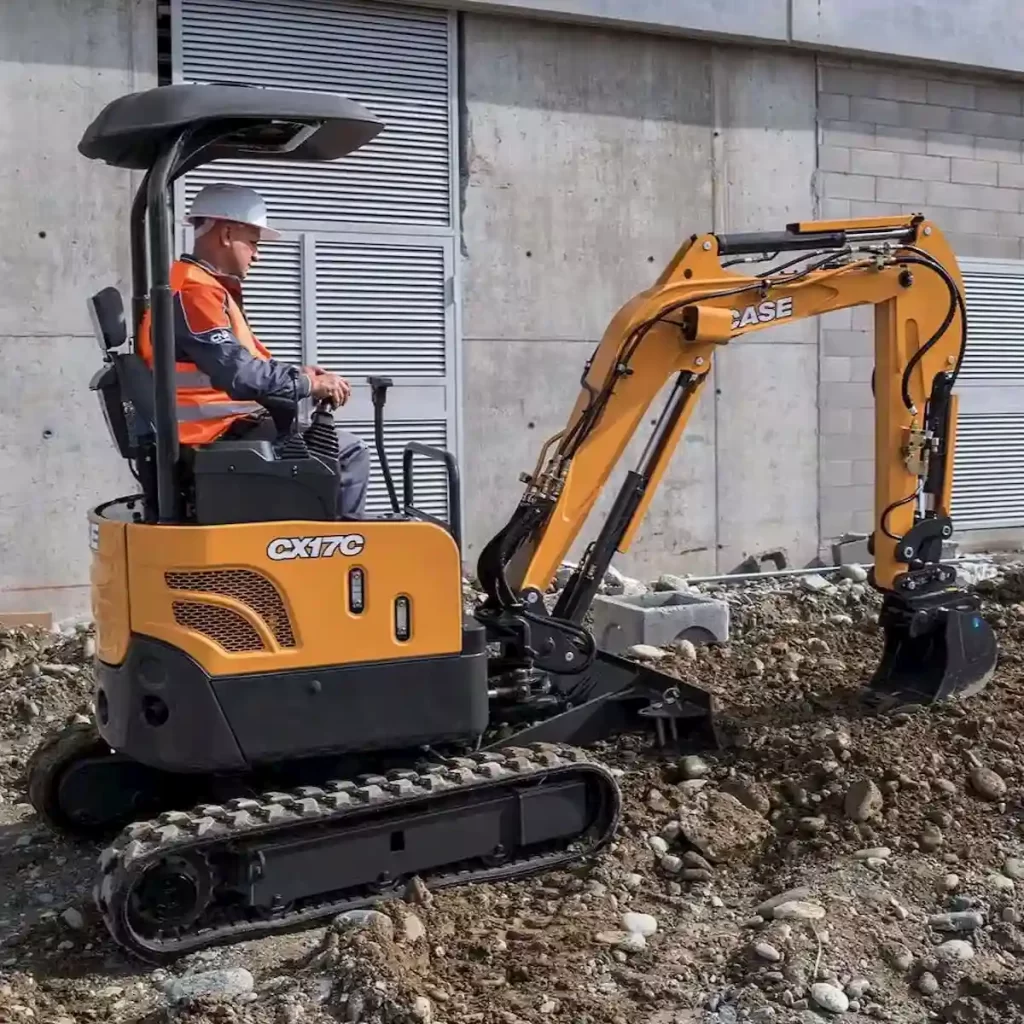
CASE models like the CX17C and CX26C also emphasize straightforward engine access and consistent starting performance — an advantage during early-morning winter jobs.
Hydraulic Response in Freezing Temperatures
Hydraulic performance is where many machines show their limitations in winter. Cold oil can lead to delayed response, reduced power, and uneven operation — all of which slow productivity and increase wear.
When evaluating a mini excavator for winter use, contractors should pay close attention to:
- Smooth control response as the machine warms up
- Protected hydraulic routing
- Consistent performance during repetitive tasks
This matters for trenching frozen ground, running breakers, or handling winter cleanup attachments. Minis with predictable hydraulic behavior allow operators to work precisely, even in less-than-ideal conditions.
Stability, Traction, and Undercarriage Design
Winter job sites are rarely flat or dry. Snow, ice, and uneven frost demand a machine that stays planted and balanced.
Tracked mini excavators perform well in winter because they:
- Maintain traction across slick surfaces.
- Reduce slipping compared to wheeled equipment.
- Provide better stability on uneven or frozen terrain.
Models like the Takeuchi TB235-2 are often selected for winter utility and maintenance work because of their balance and undercarriage design, helping operators stay confident when footing is unpredictable.
Operator Comfort Is a Productivity Factor
Winter productivity isn’t just about the machine — it’s about the operator. Cold, uncomfortable operators fatigue faster and make more mistakes.
Winter-focused mini excavators often include:
- Enclosed cab options with heat
- Clear visibility in low-light winter conditions
- Ergonomic controls usable with gloves
Machines such as the CASE CX26C, with available cab configurations, allow operators to stay productive during long winter shifts without sacrificing comfort or safety.
Attachments That Extend Winter Capability
One reason mini excavators remain valuable in winter is their versatility. With the right attachments, a single machine can perform multiple winter tasks.
Common winter applications include:
- Trenching frost-hardened soil
- Breaking frozen surfaces
- Cleanup work after snow removal
Rather than switching machines, contractors can adapt a mini excavator to handle changing winter demands — improving efficiency and return on investment.
Winter Ownership: Maintenance and Dealer Support Matter
Winter is when equipment support becomes critical. Cold weather accelerates wear and exposes small issues quickly.
Having a local mini excavator dealer means:
- Faster access to cold-weather parts and fluids
- Service technicians familiar with regional winter conditions
- Support when downtime risks increase
At Luby Equipment Services, we support contractors with new and used mini excavators for sale, along with parts, service, and financing to keep machines working through winter.
Choosing the Right Mini Excavator for Winter Work
Winter-ready performance isn’t about one feature — it’s about how the entire machine operates under stress. Takeuchi and CASE mini excavators are trusted because they deliver:
- Reliable cold starts
- Predictable hydraulic response
- Stable operation on winter job sites
- Operator comfort during long, cold days
If you’re evaluating a mini excavator for winter work, Luby Equipment Services can help you compare models, review available inventory, and select a machine suited for year-round productivity.
Contact your local Luby Equipment Services location to learn more about mini excavators built to perform when winter conditions demand more from your equipment.
Contact Us Today
To explore mini excavators for sale, discuss winter attachments, or get help selecting the right model for your jobs, contact your local Luby Equipment Services location today.